

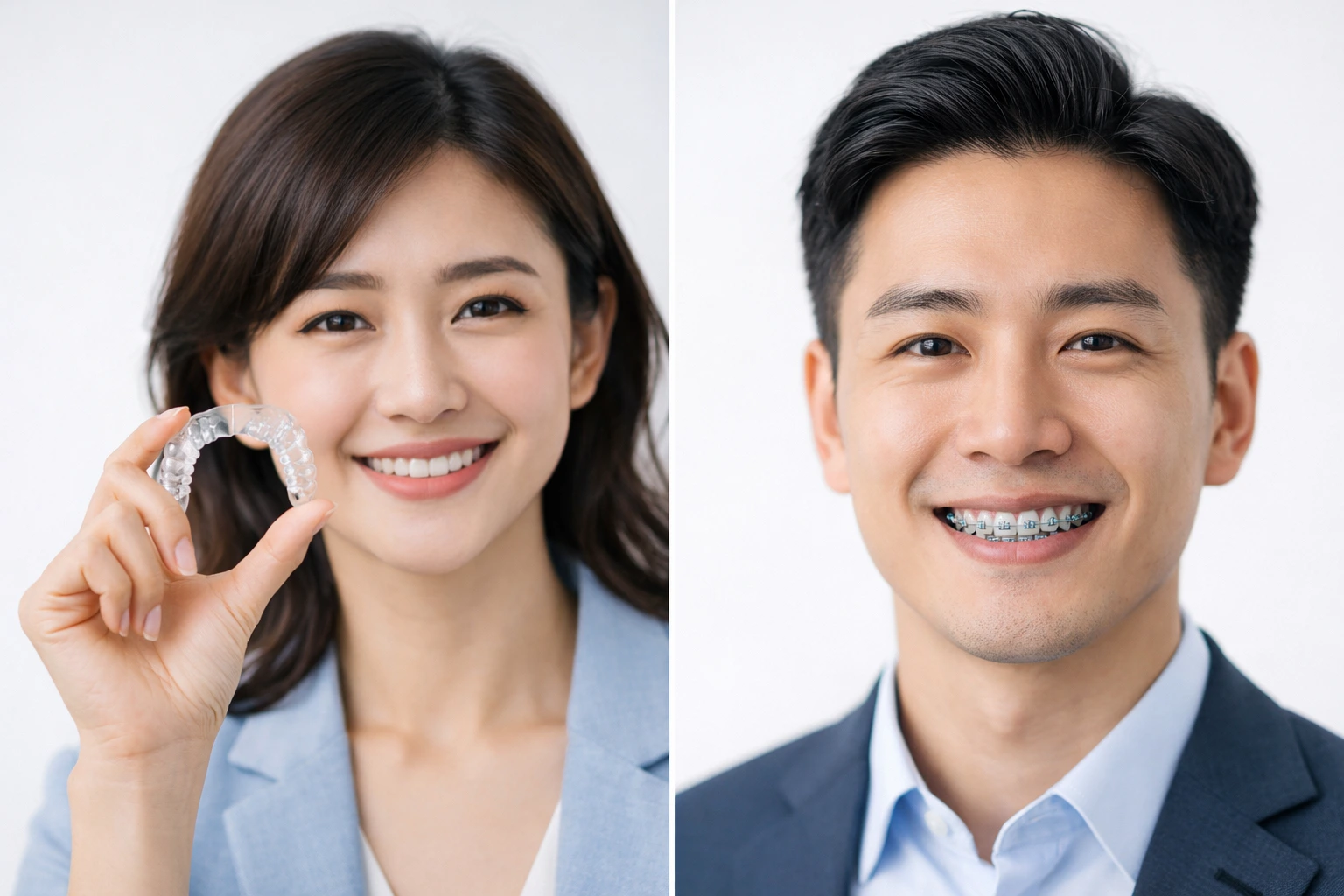
Choosing between clear aligners and traditional braces is one of the most common decisions patients face when seeking orthodontic treatment. Both methods effectively straighten teeth and correct bite issues, but they differ in appearance, comfort, treatment duration, and cost.
At Atria-City Dental Group, we understand that every smile is unique. Whether you’re considering Invisalign, ceramic braces, or metal braces, this comprehensive FAQ guide addresses the 60 most frequently asked questions to help you make an informed decision.
General Orthodontic Treatment Questions
1. What is orthodontic treatment?
Orthodontic treatment involves using devices like braces or aligners to correct misaligned teeth, bite issues, and jaw positioning for improved function and aesthetics.
2. At what age should orthodontic treatment begin?
Early evaluation around age seven is recommended, but orthodontic treatment can be successful at any age, including adulthood.
3. How long does orthodontic treatment typically take?
Most treatments range from 12 to 36 months, depending on the complexity of the case and patient compliance.
4. Why is teeth alignment important?
Properly aligned teeth improve chewing function, reduce wear on tooth enamel, lower the risk of gum disease, and enhance facial aesthetics.
5. Can adults get braces or aligners?
Absolutely. Many adults successfully undergo orthodontic treatment using both traditional braces and clear aligners.
Questions About Clear Aligners
6. What are clear aligners?
Clear aligners are custom-made, removable plastic trays that gradually shift teeth into the desired position through controlled force.
7. How do clear aligners work?
Each set of aligners is worn for one to two weeks before progressing to the next set, with each aligner moving teeth slightly closer to their final position.
8. What is Invisalign?
Invisalign is the well-known brand of clear aligners.
9. Are clear aligners invisible?
While not completely invisible, they are highly discreet and far less noticeable than metal braces.
10. Can I eat with clear aligners in?
No, aligners must be removed before eating or drinking anything other than water to prevent damage and staining.
11. How often must I wear my clear aligners?
Aligners should be worn 20 to 22 hours per day for optimal results.
12. How do I clean my clear aligners?
Rinse them with water and brush gently with a soft toothbrush. Avoid hot water, which can warp the plastic.
13. Will clear aligners affect my speech?
There may be a slight adjustment period, but most patients adapt within a few days.
14. Are clear aligners painful?
You may experience mild discomfort or pressure when switching to a new set.
15. Can clear aligners fix severe misalignment?
Clear aligners are effective for mild to moderate cases. Severe misalignment may require traditional braces or a combination approach.
16. How often do I need to visit the dentist with clear aligners?
Typically every six to eight weeks for progress monitoring and to receive new aligner sets.
17. What happens if I lose an aligner?
Contact your orthodontist immediately. You may need to wear the previous set or move to the next one, depending on timing.
18. Can I drink coffee or tea with aligners in?
It’s not recommended, as hot beverages can warp the aligners and cause staining. Remove them before drinking.
19. Do clear aligners require attachments?
Some cases require small tooth-colored attachments bonded to teeth to help aligners grip and move teeth more effectively.
20. Are clear aligners covered by insurance in Singapore?
Coverage varies by policy. Check with your insurance provider, and remember that Medisave cannot be used for orthodontic treatments.
Questions About Traditional Braces
21. What are traditional braces?
Braces consist of metal or ceramic brackets bonded to teeth, connected by wires that apply pressure to move teeth into alignment.
22. What types of braces are available?
Metal braces, ceramic braces, lingual braces (placed behind teeth), and self-ligating braces are common options.
23. How do metal braces work?
Brackets are bonded to teeth, and an archwire is threaded through them. The wire is periodically adjusted to guide teeth into position.
24. Are ceramic braces less noticeable?
Yes, ceramic braces use tooth-colored or clear brackets, making them less visible than metal braces while offering similar effectiveness.
25. Do braces hurt?
Initial placement and adjustments may cause discomfort for a few days, but over-the-counter pain relievers can help manage it.
26. Can I eat normally with braces?
Avoid hard, sticky, or chewy foods that can damage brackets and wires. Cut food into smaller pieces and chew carefully.
27. How often do I need adjustments with braces?
Typically every four to six weeks to tighten wires and monitor progress.
28. Will braces affect my speech?
You may experience a brief adjustment period, especially with lingual braces, but speech typically normalizes quickly.
29. How do I clean my teeth with braces?
Brush after every meal using a soft-bristled toothbrush and floss daily with a floss threader or orthodontic floss.
30. Can I play sports with braces?
Yes, but wear a mouthguard to protect your teeth and braces from impact.
31. What are rubber bands used for in braces?
Rubber bands (elastics) correct bite issues by applying additional force to move the jaw into proper alignment.
32. Can braces fix an overbite or underbite?
Yes, braces are highly effective in correcting various bite issues, including overbites, underbites, and crossbites.
33. Are there age restrictions for braces?
No, braces can be worn at any age, though treatment may take longer in adults due to bone density.
34. Do braces cause cavities?
Braces themselves don’t cause cavities, but poor oral hygiene during treatment can lead to tooth decay and white spot lesions.
35. Can I whiten my teeth while wearing braces?
Whitening treatments are not recommended during braces treatment. Wait until after removal for even results.
Comparing Clear Aligners and Braces
36. Which is more effective: clear aligners or braces?
Both are effective, but braces may be better for complex cases, while aligners work well for mild to moderate misalignment.
37. Which treatment is faster?
Treatment duration depends on the case, but aligners can sometimes achieve results faster due to consistent wear.
38. Are clear aligners more comfortable than braces?
Many patients find aligners more comfortable since they lack brackets and wires that can irritate the mouth.
39. Which option is more affordable?
Metal braces are generally more affordable upfront, while clear aligners tend to cost more due to advanced technology.
40. Can I switch from braces to clear aligners mid-treatment?
In some cases, yes. Consult your orthodontist to discuss feasibility and costs.
41. Which is better for adults?
Clear aligners are popular among adults due to their discreet appearance, but braces remain effective for all ages.
42. Do clear aligners require dietary restrictions?
No, since they’re removable. Just remember to remove them before eating.
43. Which requires more maintenance?
Braces require more effort to clean around brackets and wires, while aligners are removed for cleaning.
44. Can both options fix gaps between teeth?
Yes, both braces and clear aligners can effectively close gaps.
45. Which is better for severe crowding?
Braces are typically more effective for severe crowding and complex tooth movements.
Cost and Financial Considerations
46. How much do clear aligners cost in Singapore?
Costs typically range from SGD 4,000 to SGD 9,000, depending on complexity and treatment duration.
47. How much do traditional braces cost in Singapore?
Metal braces generally range from SGD 3,500 to SGD 7,000, while ceramic braces may cost SGD 5,000 to SGD 9,000.
48. Can I use Medisave for orthodontic treatment?
Unfortunately, Medisave cannot be used for orthodontic treatments in Singapore.
49. Do clinics offer payment plans?
Many clinics, including Atria-City Dental Group, offer flexible payment plans to make treatment more affordable.
50. Is orthodontic treatment covered by insurance?
Some insurance plans cover a portion of orthodontic treatment. Check with your provider for details.
Aftercare and Retention
51. What happens after my braces or aligners are removed?
You’ll need to wear a retainer to prevent teeth from shifting back to their original positions.
52. How long do I need to wear a retainer?
Initially, retainers are worn full-time, then transitioned to nighttime wear indefinitely to maintain results.
53. What types of retainers are available?
Removable retainers (Hawley or clear plastic) and fixed retainers (bonded to the back of teeth) are common options.
54. Can teeth shift after treatment?
Yes, teeth naturally tend to shift over time, which is why retainer wear is essential.
55. What if my retainer breaks?
Contact your orthodontist immediately for a replacement to avoid unwanted tooth movement.
Treatment Outcomes and Expectations
56. Will my face shape change after orthodontic treatment?
Orthodontic treatment primarily affects teeth alignment, but significant bite corrections can subtly enhance facial symmetry.
57. Can orthodontic treatment improve jaw pain?
Yes, correcting bite issues and alignment can reduce jaw pain and tension associated with TMJ disorders.
58. How soon will I see results?
Initial changes may be visible within a few months, but full results require completing the entire treatment plan.
59. What if I’m not satisfied with the results?
Discuss concerns with your orthodontist. Minor adjustments or refinements can often be made post-treatment.
60. How do I choose between clear aligners and braces?
Consider your lifestyle, aesthetic preferences, budget, and the complexity of your case. Consult an experienced orthodontist for personalized recommendations.
Why Choose Atria-City Dental Group for Orthodontic Treatment?
At Atria-City Dental Group, our experienced orthodontists specialize in both clear aligners and traditional braces, offering personalized treatment plans tailored to your unique needs. With over 30 years of experience serving families in Singapore, we combine advanced technology with compassionate care.
Whether you’re an adult seeking discreet alignment options or a parent exploring treatment for your child, our team is here to guide you every step of the way. We treat our patients like family, ensuring comfort, transparency, and outstanding results.
Ready to transform your smile? Book a consultation at Atria-City Dental Group, conveniently located at Ngee Ann City, Orchard Road. Call +65 6737 2777 or visit our website to schedule your appointment today.
Leave a Reply