

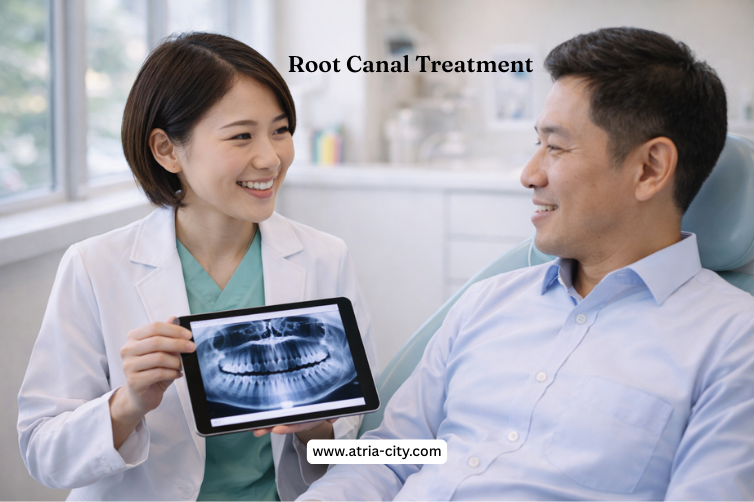
Experiencing persistent tooth pain, sensitivity to hot or cold, or swelling around your gums? These could be signs that you need root canal treatment. Despite its intimidating reputation, root canal therapy is a routine dental procedure that can save your natural tooth, eliminate pain, and restore full function.
At Atria-City Dental Group, we understand that dental anxiety is real, especially when it comes to root canal treatment. This comprehensive guide will walk you through everything you need to know about the procedure, from symptoms and diagnosis to recovery and costs in Singapore.
What Is Root Canal Treatment?
Root canal treatment, also known as endodontic therapy, is a dental procedure designed to remove infected or damaged pulp tissue from inside your tooth. The pulp contains nerves, blood vessels, and connective tissue that keep your tooth alive during development. When the pulp becomes infected or inflamed due to deep decay, cracks, or trauma, it can cause severe pain and lead to abscess formation if left untreated.
During root canal treatment, your dentist removes the diseased pulp, thoroughly cleans and disinfects the root canal system, and seals it to prevent future infection. A crown is typically placed afterward to restore the tooth’s strength and appearance.
Signs You May Need Root Canal Treatment
Many patients are unaware they need root canal treatment until symptoms become severe. Watch for these warning signs:
Persistent tooth pain that doesn’t go away, especially when chewing or applying pressure, is a primary indicator. The pain may be constant or come and go, but it shouldn’t be ignored.
Prolonged sensitivity to hot or cold temperatures that lingers even after the stimulus is removed suggests nerve damage or infection.
Tooth discoloration, particularly darkening or graying of a tooth, can indicate internal damage or dying pulp tissue.
Swollen and tender gums near the affected tooth, sometimes accompanied by a pimple-like bump, may signal an abscess.
A cracked or chipped tooth that exposes the inner layers can allow bacteria to enter and infect the pulp.
Loose teeth can result from infection softening the bone around the tooth root.
If you experience any of these symptoms, schedule an appointment with your dentist immediately. Early intervention can prevent complications and save your tooth.
What Causes Pulp Infection?
Understanding the causes of pulp infection can help you take preventive measures:
Deep tooth decay is the most common cause, allowing bacteria to penetrate the enamel and dentin layers to reach the pulp.
Dental trauma from sports injuries, accidents, or biting hard objects can crack or fracture teeth, exposing the pulp to bacteria.
Repeated dental procedures on the same tooth can weaken it and increase the risk of pulp damage over time.
Cracks and chips, even minor ones, create pathways for bacteria to enter the tooth.
Gum disease in advanced stages can cause infection to spread to the tooth roots.
The Root Canal Treatment Process: What to Expect
Many patients fear root canal treatment due to misconceptions about pain and discomfort. Modern techniques and anesthesia have made the procedure virtually painless, comparable to getting a routine filling.
Step 1: Diagnosis and X-Rays
Your dentist will conduct a thorough examination, including X-rays, to assess the extent of infection and determine if root canal treatment is necessary. The X-ray reveals the shape of the root canals and checks for signs of infection in surrounding bone.
Step 2: Local Anesthesia
Local anesthesia is administered to numb the affected tooth and surrounding area, ensuring you remain comfortable throughout the procedure. For patients with dental anxiety, sedation options are available.
Step 3: Isolation with Rubber Dam
A small rubber sheet called a dental dam is placed around the tooth to keep it dry and free from saliva during the procedure. This also prevents any instruments or materials from being accidentally swallowed.
Step 4: Accessing the Pulp Chamber
Your dentist creates a small opening in the crown of the tooth to access the pulp chamber and root canals.
Step 5: Removing Infected Pulp
Using specialized instruments called files, the dentist carefully removes the infected or damaged pulp tissue from the pulp chamber and root canals. The canals are then shaped to prepare them for filling.
Step 6: Cleaning and Disinfecting
The empty canals are thoroughly cleaned and disinfected with antimicrobial solutions to eliminate bacteria and prevent reinfection.
Step 7: Filling the Canals
Once cleaned, the canals are filled with a biocompatible material called gutta-percha, which seals the space and prevents bacteria from re-entering.
Step 8: Temporary or Permanent Filling
A temporary filling is placed to close the access opening. In some cases, a permanent filling may be placed immediately.
Step 9: Crown Placement
A dental crown is typically recommended on posterior teeth after root canal treatment to protect and restore the tooth’s strength and appearance. Crown placement usually occurs a few weeks after the root canal.
Does Root Canal Treatment Hurt?
Thanks to modern anesthesia and advanced techniques, root canal treatment is no more uncomfortable than getting a dental filling. Most patients report feeling little to no pain during the procedure. Any discomfort experienced is usually mild and manageable with over-the-counter pain relievers during recovery.
The pain you feel before treatment—caused by the infection—is often far worse than the procedure itself. Root canal treatment actually relieves that pain by removing the source of infection.
Recovery and Aftercare
Recovery from root canal treatment is typically quick and straightforward. Here’s what to expect:
Immediate Post-Treatment: You may experience slight tenderness or sensitivity for a few days as the inflammation subsides. This is normal and can be managed with over-the-counter pain medication like ibuprofen or paracetamol.
Avoid Chewing on the Treated Tooth: Until the permanent crown is placed, avoid chewing hard or sticky foods on the treated side.
Maintain Good Oral Hygiene: Brush and floss regularly, being gentle around the treated area.
Attend Follow-Up Appointments: Your dentist will schedule a follow-up visit to monitor healing and place the permanent crown.
Watch for Complications: While rare, contact your dentist if you experience severe pain, swelling, or an allergic reaction.
How Long Does a Root Canal-Treated Tooth Last?
With proper care and crown placement, a root canal-treated tooth can last a lifetime. The key to longevity is maintaining excellent oral hygiene, attending regular dental check-ups, and protecting the tooth with a crown.
Studies show that root canal treatment has a success rate of over 95%, making it a highly reliable procedure for saving natural teeth.
Medisave for Root Canal Treatment: Singaporeans and Permanent Residents can use Medisave to cover part of the cost for complex surgical procedures. Check with your dentist about eligibility and claimable amounts.
At Atria-City Dental Group, we offer transparent pricing and flexible payment plans to make treatment accessible for all patients.
Root Canal Treatment vs Tooth Extraction
When faced with a severely infected or damaged tooth, you may wonder whether to save it with root canal treatment or opt for extraction. Here’s why saving your natural tooth is almost always the better choice:
Preserves Natural Function: Your natural tooth maintains proper chewing function and jaw alignment.
Prevents Bone Loss: Tooth extraction leads to bone resorption over time, which can affect facial structure and make future dental work more challenging.
Avoids Shifting Teeth: Extracting a tooth creates a gap that can cause adjacent teeth to shift, leading to bite problems.
Cost-Effective Long-Term: While extraction may seem cheaper initially, replacing the tooth with a bridge or implant costs significantly more than root canal treatment with a crown.
Extraction should be considered only when a tooth is too damaged to be saved or when root canal treatment is not feasible.
When to See a Specialist: Endodontist vs General Dentist
Most root canal treatments can be successfully performed by general dentists with appropriate training and experience. However, certain complex cases may require referral to an endodontist—a dental specialist with advanced training in root canal therapy.
Consider seeing an endodontist if:
- The tooth has unusually shaped or blocked canals
- Previous root canal treatment has failed and retreatment is needed
- The tooth has severe infection or complications
- You have dental anxiety and prefer a specialist’s expertise
At Atria-City Dental Group, our experienced team includes both general dentists skilled in endodontics and specialists who collaborate to provide the best possible care for complex cases.
Preventing the Need for Root Canal Treatment
While root canal treatment is highly effective, prevention is always preferable. Here are steps you can take to protect your teeth:
Practice Excellent Oral Hygiene: Brush twice daily with fluoride toothpaste and floss daily to remove plaque and prevent decay.
Attend Regular Dental Check-Ups: Visit your dentist every six months for professional cleanings and early detection of problems.
Address Cavities Promptly: Treat small cavities before they progress to deeper layers and infect the pulp.
Wear a Mouthguard: Protect your teeth during sports and physical activities to prevent trauma.
Avoid Hard Foods: Be cautious when chewing ice, hard candies, or unpopped popcorn kernels that can crack teeth.
Manage Teeth Grinding: If you grind your teeth at night (bruxism), ask your dentist about a custom nightguard to protect your teeth from damage.
Why Choose Atria-City Dental Group for Root Canal Treatment?
At Atria-City Dental Group, we’ve been providing trusted dental care in Singapore since 1994. Our philosophy is simple: we treat patients the way we would treat our own loved ones, with compassion, transparency, and excellence.
Experienced Team: Our general dentists and endodontic specialists have extensive training and experience in performing root canal treatments of all complexities.
Advanced Technology: We use digital X-rays, rotary endodontic instruments, and modern sterilization protocols to ensure precise, safe, and comfortable treatment.
Patient-Centered Care: We understand dental anxiety and take the time to explain every step of the procedure, answer your questions, and ensure you’re comfortable throughout.
Convenient Location: Located in the heart of Orchard Road at Ngee Ann City, we’re easily accessible via Orchard MRT and Somerset MRT.
Transparent Pricing: We provide clear cost estimates upfront and support Medisave claims where applicable.
Don’t Let Tooth Pain Control Your Life
If you’re experiencing tooth pain or suspect you may need root canal treatment, don’t wait. Delaying treatment can lead to more severe infection, bone loss, and even tooth loss. Root canal therapy is a safe, effective solution that can save your natural tooth and restore your quality of life.
Schedule your consultation at Atria-City Dental Group today. Call +65 6737 2777 or visit our website to book an appointment. Our caring team is here to help you achieve lasting oral health and a pain-free smile.
Leave a Reply