

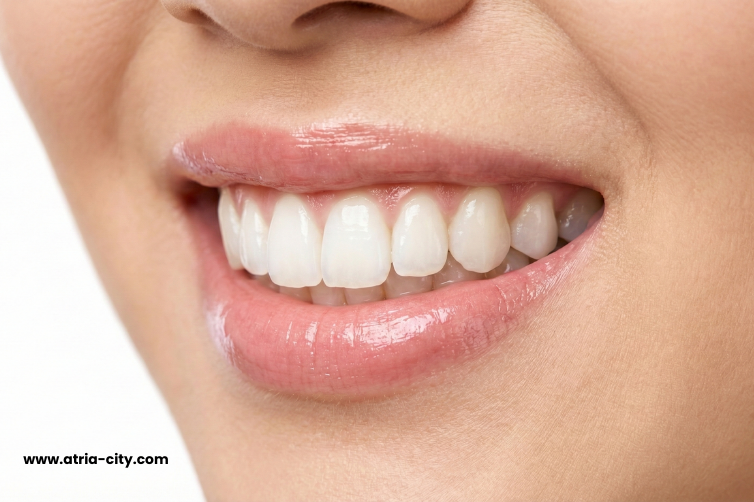
A bright, white smile can boost your confidence and make a lasting impression. If you’re considering teeth whitening in Singapore, you likely have many questions about the process, safety, costs, and results. At Atria-City Dental Group, we help patients achieve their dream smiles through safe, effective whitening treatments.
This comprehensive FAQ guide answers the 60 most common questions about teeth whitening, from professional treatments to at-home options, helping you make an informed decision about brightening your smile.
Understanding Teeth Discoloration
1. What causes teeth to become discolored?
Teeth discoloration occurs due to extrinsic stains (surface stains from foods, drinks, tobacco) and intrinsic stains (within the tooth structure from aging, medications, trauma, or genetics).
2. Are yellowed teeth unhealthy?
Not necessarily. Yellow teeth can be perfectly healthy. Natural tooth color varies, and enamel naturally becomes more translucent with age, revealing the yellowish dentin underneath.
3. Can all teeth be whitened?
Most natural teeth respond well to whitening, but teeth with intrinsic stains from medications like tetracycline, fluorosis, or dead nerves may be more challenging and require alternative cosmetic treatments.
4. Why do teeth become more yellow as we age?
Enamel thins over time through natural wear, exposing more of the yellow dentin layer beneath. Additionally, years of stain accumulation contribute to discoloration.
5. Do certain foods and drinks stain teeth more than others?
Yes. Coffee, tea, red wine, dark sodas, berries, curry, soy sauce, and tomato-based foods are common culprits due to their intense pigmentation and acidity.
Professional Teeth Whitening
6. What is professional teeth whitening?
Professional whitening uses high-concentration bleaching agents (hydrogen peroxide or carbamide peroxide) applied by a dentist to lighten tooth color several shades in one or more sessions.
7. How does professional whitening differ from at-home kits?
Professional treatments use stronger bleaching agents under controlled conditions, achieving faster, more dramatic results with dentist supervision to ensure safety and effectiveness.
8. What types of professional whitening are available?
In-office whitening (single appointment with immediate results) and take-home professional kits (custom trays with dentist-grade gel for gradual whitening over weeks).
9. How does in-office whitening work?
Your dentist applies protective barriers to the gums, followed by concentrated whitening gel to the teeth. The process typically takes 60-90 minutes.
10. How many shades whiter can I expect from professional whitening?
Most patients achieve 4-8 shades lighter, though results vary based on starting shade, stain type, and individual tooth characteristics.
11. Is professional teeth whitening painful?
Most patients experience no pain, though some have temporary tooth sensitivity during or after treatment. This typically resolves within 24-48 hours.
12. How long do professional whitening results last?
Results typically last 1-3 years, depending on oral hygiene, dietary habits, and tobacco use. Touch-up treatments can maintain brightness longer.
13. Can I whiten just one tooth?
Yes, single tooth whitening is possible, often needed after root canal treatment when a tooth darkens internally.
14. Will whitening work on veneers, crowns, or fillings?
No, whitening only works on natural tooth enamel. Existing dental work will remain the same color and may need replacement to match newly whitened teeth.
15. How often can I safely whiten my teeth professionally?
Most dentists recommend waiting at least 6-12 months between professional whitening sessions to allow enamel to remineralize.
At-Home Whitening Options
16. Are over-the-counter whitening products effective?
Limited, they contain lower concentrations of bleaching agents and take longer to show results compared to professional treatments.
17. What are whitening strips?
Thin, flexible strips coated with peroxide gel that adhere to teeth for a specified time (typically 30 minutes daily for 2 weeks).
18. Do whitening toothpastes really work?
Whitening toothpastes contain mild abrasives and chemical agents that remove surface stains but don’t significantly change the natural color of teeth. Dentists advise caution when using whitening toothpaste.
19. What about activated charcoal toothpaste?
While marketed for whitening, activated charcoal is abrasive and can damage enamel over time. Most dentists don’t recommend it for regular use.
20. Are LED whitening kits safe?
LED lights don’t whiten teeth themselves. They may slightly accelerate the bleaching process, but research shows minimal added benefit compared to gel alone.
21. How do dentist-provided take-home kits differ from store-bought options?
Dentist-provided kits include custom-fitted trays for even gel distribution and professional-grade gel concentrations, offering better results than generic one-size-fits-all products.
22. Can I use whitening mouthwash?
Whitening mouthwashes contain small amounts of bleaching agents and may help maintain results, but they’re not effective for significant whitening alone.
23. How long should I use at-home whitening products?
Follow product instructions carefully.
24. Can I combine different whitening products?
Consult your dentist before combining products. Using multiple whitening treatments simultaneously can increase the risk of sensitivity.
25. Are natural whitening remedies like baking soda safe?
Baking soda is mildly abrasive and can remove surface stains occasionally, but regular use may wear down enamel. Avoid harsh DIY remedies like lemon juice or vinegar.
Safety and Side Effects
26. Is teeth whitening safe?
Yes, when done properly under dentist supervision. Professional whitening has been extensively studied and deemed safe for tooth enamel and gums.
27. What are the side effects of teeth whitening?
The most common side effect is temporary tooth sensitivity to temperature and touch, typically resolving within 48 hours.
28. Why do my teeth feel sensitive after whitening?
Bleaching agents temporarily open microscopic pores in enamel, exposing dentine and nerve endings. This sensitivity is temporary as enamel remineralizes.
29. How can I reduce sensitivity from whitening?
Use desensitizing toothpaste before and after treatment, avoid extremely hot or cold foods temporarily, and follow your dentist’s recommendations for fluoride treatments.
30. Can whitening damage tooth enamel?
When used as directed, whitening products don’t damage enamel. However, excessive or improper use can weaken enamel over time.
31. Can I whiten my teeth if I have sensitive teeth?
Yes, but inform your dentist. They can adjust treatment protocols, use desensitizing agents, or recommend gentler alternatives.
32. Is whitening safe during pregnancy or breastfeeding?
Most dentists recommend avoiding elective whitening treatments during pregnancy and breastfeeding as a precaution, though no definitive harm has been proven.
33. Can children and teenagers whiten their teeth?
Dentists typically recommend waiting until all permanent teeth have erupted (around age 16) before whitening, as young teeth have larger pulp chambers and are more sensitive.
34. What if I accidentally swallow whitening gel?
Small amounts are generally harmless, but contact your dentist or poison control if you swallow significant amounts or experience nausea or stomach discomfort.
35. Can whitening cause gum irritation?
Yes, if the whitening gel contacts gum directly. Professional treatments include protective barriers, while at-home kits should be used carefully to avoid gum contact.
Whitening for Specific Conditions
36. Can I whiten teeth with cavities?
No. Cavities must be treated first, as whitening gel can penetrate decay and irritate the pulp, causing severe pain.
37. Will whitening help teeth stained by medication?
Tetracycline staining and other medication-induced discoloration are challenging to treat with whitening alone and may require veneers or bonding for optimal results.
38. Can I whiten teeth with gum disease?
Gum disease should be treated and controlled before whitening to prevent gel from irritating inflamed gum tissue.
39. What about whitening teeth with enamel erosion?
Teeth with significant enamel loss may not be good candidates for whitening. Your dentist can assess and recommend alternatives.
40. Can I whiten teeth after braces?
Yes, whitening after braces removal is common. Wait 2-4 weeks after removal to allow teeth to settle and any initial sensitivity to resolve.
Cost and Value
41. How much does professional teeth whitening cost in Singapore?
In-office whitening typically ranges from SGD 700 to SGD 1,200, while take-home professional kits cost SGD 500 to SGD 1000. Consult the dentist for exact cost for your condition.
42. Is professional whitening worth the cost compared to drugstore products?
Professional whitening delivers faster, more dramatic, and longer-lasting results with dentist supervision, making it more cost-effective long-term for many patients.
43. Does dental insurance cover teeth whitening?
Most dental insurance plans consider whitening cosmetic and don’t provide coverage, though some plans offer discounts on elective procedures.
44. Can I use Medisave for teeth whitening?
No, Medisave cannot be used for cosmetic procedures like teeth whitening.
45. Are payment plans available for whitening treatments?
Many dental clinics, including Atria-City Dental Group, offer flexible payment options to make professional whitening more accessible.
Maintaining Whitening Results
46. How do I maintain my whitening results?
Practice excellent oral hygiene, limit staining foods and drinks, use a straw for dark beverages, quit smoking, and schedule regular dental cleanings.
47. Should I avoid certain foods after whitening?
For 48 hours post-whitening, avoid dark-colored foods and drinks (coffee, red wine, berries, soy sauce) as teeth are more porous and susceptible to staining.
48. Does smoking affect whitening results?
Yes, tobacco causes significant staining. Smoking after whitening will quickly diminish results and may cause uneven discoloration.
49. How often should I get touch-up treatments?
Most patients benefit from touch-ups every 6-12 months, though frequency depends on lifestyle habits and desired brightness level.
50. Can whitening toothpaste help maintain results?
Yes, whitening toothpaste can help remove surface stains and prolong professional whitening results when used as part of your daily routine.
Comparing Whitening to Other Cosmetic Options
51. Should I choose whitening or veneers?
Whitening is ideal for generally healthy teeth that are discolored. Veneers are better for teeth with chips, cracks, severe discoloration, or shape irregularities.
52. What is the difference between whitening and bleaching?
Technically, “bleaching” refers to using peroxide to whiten teeth beyond their natural color, while “whitening” restores natural color by removing stains. The terms are often used interchangeably.
53. Can bonding be whitened?
No, dental bonding material doesn’t respond to whitening. If you have bonding, whiten first, then have bonding redone to match your new shade.
54. Is whitening better than professional cleaning for stain removal?
Professional cleanings remove external stains from plaque and tartar buildup, while whitening changes the intrinsic color of teeth. Many patients benefit from both.
55. What about internal bleaching for root canal-treated teeth?
Internal bleaching (walking bleach technique) places whitening gel inside a tooth that has darkened after root canal treatment, effectively brightening it from within.
Choosing the Right Whitening Treatment
56. How do I know which whitening treatment is right for me?
Consult your dentist for a comprehensive evaluation. They’ll assess your oral health, discuss goals and expectations, and recommend the most appropriate treatment.
57. What questions should I ask my dentist about whitening?
Ask about expected results, treatment duration, potential sensitivity, maintenance requirements, costs, and whether your teeth are good candidates for whitening.
58. Can I try whitening if I’m not sure I’ll like the results?
Start with professional take-home kits for gradual whitening that you can stop once you achieve your desired shade, offering more control than in-office treatments.
59. What shade should I aim for?
Aim for a natural-looking brightness that complements your skin tone. Your dentist can help you choose a realistic and aesthetically pleasing target shade.
60. Why choose Atria-City Dental Group for teeth whitening?
Our experienced cosmetic dentists use advanced whitening systems, provide personalized treatment plans, ensure patient comfort, and deliver beautiful, natural-looking results. With over 30 years of experience serving Singapore families, we’re committed to helping you achieve your brightest, most confident smile safely and effectively.
Your Journey to a Brighter Smile Starts Here
Teeth whitening is one of the most popular and effective cosmetic dental treatments available. Whether you choose in-office whitening for immediate results or take-home kits for gradual brightening, professional guidance ensures safety, effectiveness, and beautiful outcomes.
Ready to brighten your smile?
Schedule a whitening consultation at Atria-City Dental Group today. Our team will assess your teeth, discuss your goals, and create a customized whitening plan that delivers the radiant smile you deserve.
Contact us at +65 6737 2777 or visit us at Ngee Ann City, Orchard Road, Singapore. Your journey to a whiter, more confident smile begins here.
Leave a Reply